
Avoiding Basic Mistakes When Buying a skid steers: Top 7 Tips from the Experts
Buying a skid steer is a big decision for a construction, landscaping, or farming business. These go-anywhere machines are the mainstay of countless jobs, providing the power and flexibility to handle a wide range of tasks.
Still, the journey toward a great loader is not always smooth, as there are plenty of hazards along the way. Not making common mistakes when buying a skid steer requires a careful and smart approach and one should also know exactly what kind of job site is to be serviced.
A rash or uninformed decision can settle you an unnecessarily costly operation, machines frequently breaking down, and a machine that simply doesn’t fit your project requirements.
Choosing the equipment for a job is more than just selecting a well-known brand. It means going through the specs, performance in terms of hydraulics, and what long-term servicing will be like in detail. There are a lot of buyers who get tricked into paying more for features they will never use or on the contrary, getting themselves an underpowered machine which then easily breaks down when subjected to heavy work.
By sticking to expert advice and mainly concentrating on avoiding common mistakes on buying a skid steer, you will get a machine that will help you increase your output and that will be able to grow along with your company.
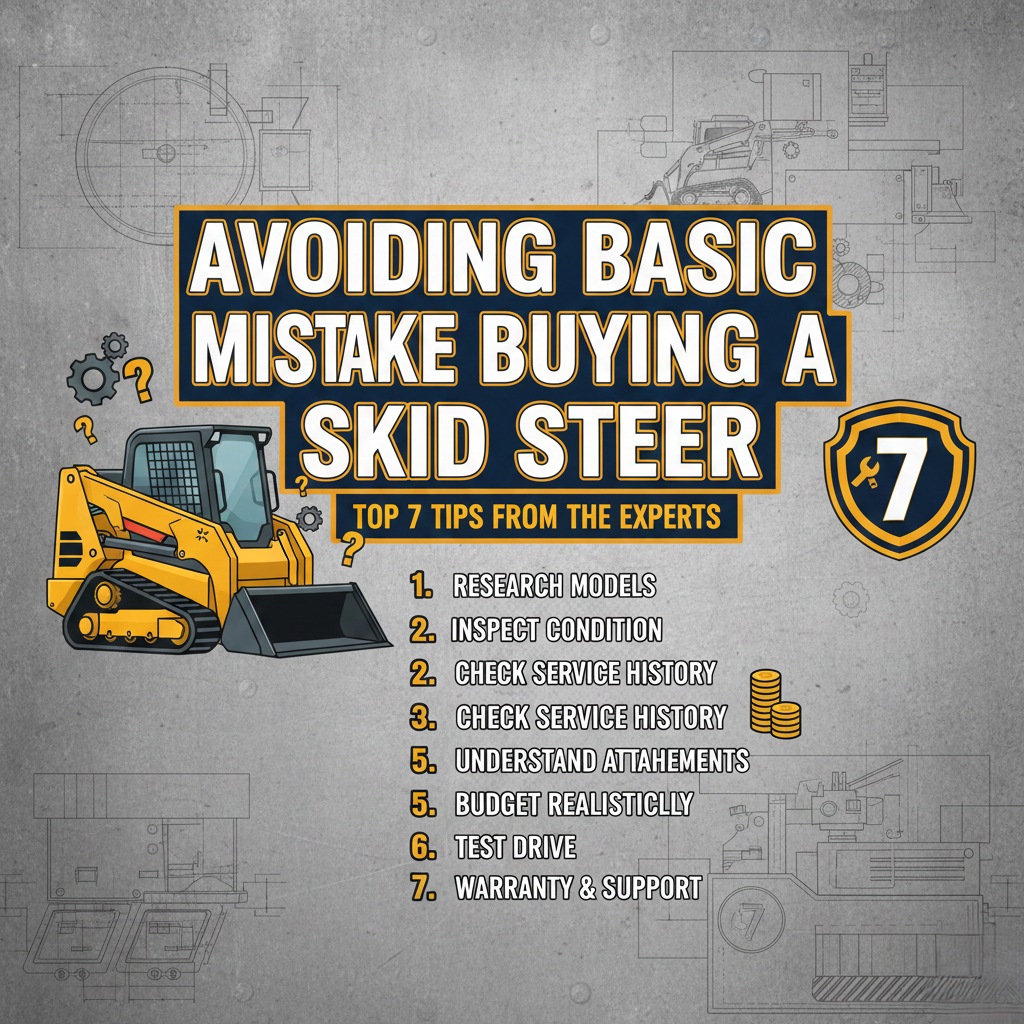
Top 7 Tips to Avoid while Buying a Skid Steer:
1. Not considering Rated Operating Capacity (ROC) and Lift Path
It is very common to see people buying a skid steer to make their work easier, but most of the time it doesn’t match the capability of the machine. ROC is the amount of weight that a skid steer can handle safely without the risk of tipping over.
Not making common mistakes when buying a skid steer means that you are aware of the weight limit; if you select a machine whose ROC is not enough, you are risking your safety and the machine will suffer from wear and tear.
Besides that, you have to decide between a radial lift and a vertical lift as they both have their advantages and it also depends on your workflow.
- Look at your load sizes: Apart from the weight of the heaviest materials you move each day, always add a 20% safety margin.
- Check with your worksite’s elevation changes: If you are lifting over obstacles leading up to a dump, then a vertical design is more suitable.
- Factor in the weight of your attachments: Remember that the ROC should contain not only the material load but also the attachment’s weight.
| Lift Type | Primary Application | Best Performance Range |
| Radial Lift | Grading, Excavating, Paving | Greatest reach at mid-range height |
| Vertical Lift | Truck Loading, Pallet Stacking | Greatest reach at full lift height |
2. Not Checking the Hydraulic Flow Specifications Needed for Attachments
A skid steer without the capability to use attachments is just an expensive toy. It is therefore essential for you to avoid common mistakes on buying a skid steer in that you ensure the hydraulic output of the machine can match your tools, whether you want to use an auger, a trencher, or high-flow cold planer.
The standard flow is typically between 17 and 24 GPM, which is enough for buckets and forks. However, when using high-demand tools, the system must be high-flow reaching 30 to 45 GPM. Not confirming these specs may lead to attaching gadgets that are operating sluggishly or the hydraulic system overheating.
- Know what attachments you already have and what you will need in the future: Be aware of your inventory so as to get a machine with the right output level.
- Look at the PSI values: GPM is important, but also, make sure that the PSI is compatible with your tool.
- If after checking you are still not quite sure, select high-flow: Just imagine land clearing or heavy demolition equipment if you decide for a high-flow machine now, you will not have to trade later for a different model.
3. Not Taking Into Account Total Cost of Ownership (TCO)
Sometimes, a buyer who is not very well experienced in equipment purchases just sees the price tag and goes for the cheaper one, without knowing what other expenses there are to a machine like compounding the higher fuel consumption, having to buy tires more often and maybe be more frequent in maintenance.
Not making common mistakes when buying a skid means you are looking at the “Big Picture”. A “cheap” machine that uses a lot of fuel and has expensive parts from a proprietary line can very quickly cost more than a high-end model with improved fuel economy. Plus, deciding whether to go for wheels or tracks (Compact Track Loaders) will largely determine the TCO as the undercarriage maintenance costs differ.
- Compare average fuel consumption rates: Check how much fuel the different engine models you are considering burn each hour on average.
- Include the undercarriage into your costing: Calculate the time for which tires vs. tracks can be used with your main surface (asphalt vs. soft dirt).
- Check warranty and dealer support: A machine that is a bit more expensive but comes with a solid warranty and provides local parts easily can be a real savior in ambulance hours.
4. Underestimating Operator Comfort and Ergonomics
Simply put, an uncomfortable operator is going to be a less productive and also potentially more unsafe operator. It is very common to rush and only look at horsepower and torque figures, but there can be a step missed here in avoiding common mistakes on buying a skid steer.
When a skid steer is a no in the cabin visibility, controls are so crammed that it is difficult to get used to them, or you have poor heating or A/C, operators get tired quicker. Pressurized cabs, ergonomic joysticks with real diagnostic displays are features of a current generation. High-end seats, extremely low noise levels, and all these are keys to the operator never dropping in performance even if it’s a very long day.
- Check all around the cabin for visibility: Take a seat inside and look through the windows. Turn your head to the back and to the side of the attachment too. Make sure the line of sight is good.
- Have a control layout try out: The control systems (ISO or H-pattern) should be either familiar to your operators or at least easily switchable by them via a toggle.
- Test the HVAC as well: In case you are operating under the presence of extreme temperatures either hot or freezing, the HVAC has to be able to keep the inside temperature stable.
5. Failing to Inspect Used Machines Thoroughly
When buying pre-owned, some of the buyers look at how shiny the paint is and ignore the mechanical parts of the vehicle which is a big mistake. Not making common mistakes when purchasing a skid steer requires looking deeper. Amongst the most frequent buyer mistakes include not seeing hydraulic leak signs, ignoring hairline cracks in the arms of the loader, or excessive play in the pins and bushings.
A well-kept appearance alone might hide an engine that is completely worn out. It is essential to check the function hours and compare that number with how much physical wear there is on the machine to get it right.
- Going through fluid samples: In case you cannot check the inside of the engine, you can request Fluid samples (oil and hydraulics) to check the wear of metal parts or contamination.
- Looking for welds repair: Check the body and arms for any unauthorized weldings, which usually indicate prior structural damages.
- Walking through the test with a load: Do not purchase any second-hand skid steer without testing it under loading conditions to make sure the hydraulic system is strong enough to deliver the power even at operating temperature.
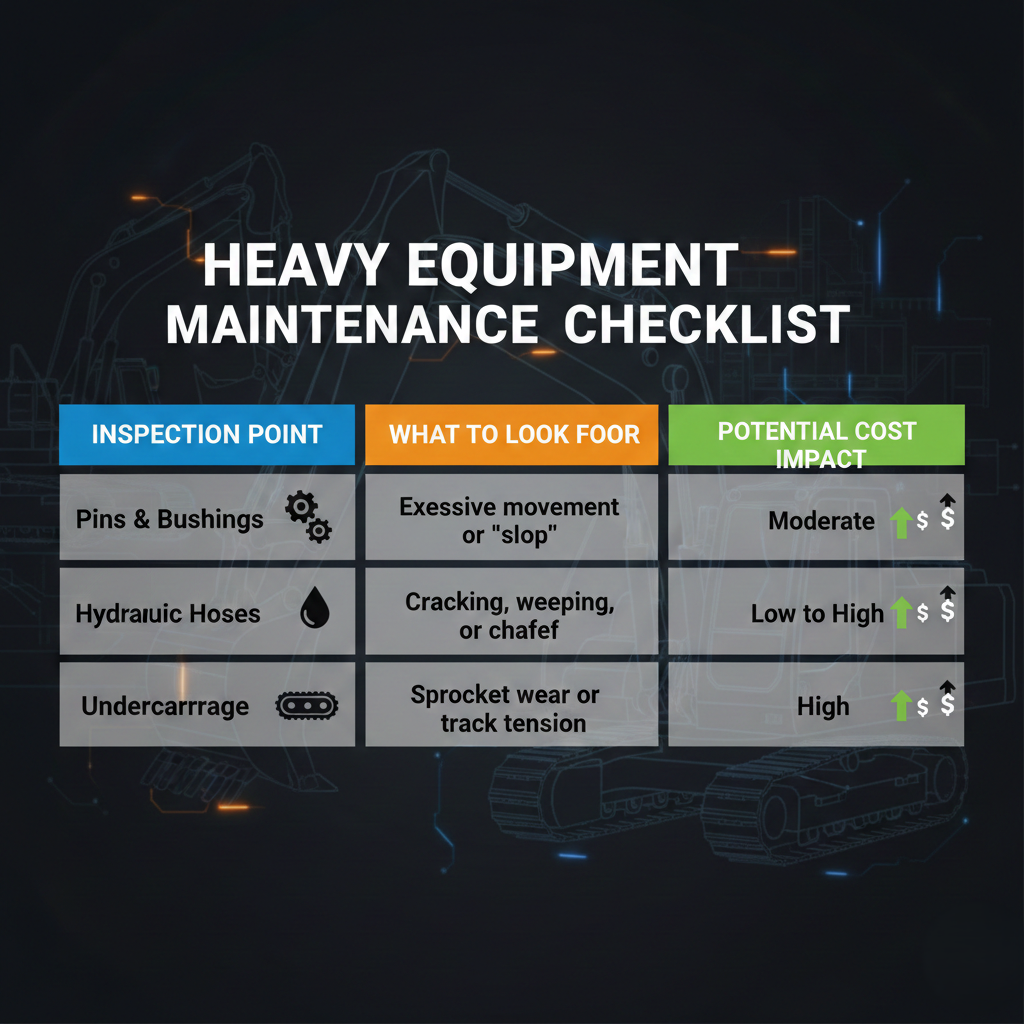
| Inspection Point | What to Look For | Potential Cost Impact |
| Pins & Bushings | Excessive movement or “slop” | Moderate – Requires labor-intensive replacement |
| Hydraulic Hoses | Cracking, weeping, or chafing | Low to High – Risk of sudden failure and spills |
| Undercarriage | Sprocket wear or track tension | High – Tracks and rollers are expensive to replace |
6.Choosing an inappropriately sized one for your job site
A skid steer’s power is just as important as its size itself. The physical daily routine of a skid steer reflects the usage of a machine perfectly. A common mistake is getting a machine that is going to be too big for those tight spaces in residential landscaping.
Conversely, in using small machines for large-scale earthmoving, the engines get “overworked”. Not making common mistakes when buying a skid steer consists of you wanting both a small footprint and enough weight to keep stability during heavy lifting.
- Plan the loosening of loading: Make sure you can load or unload your new machine on your truck and trailer and that it will be legal and safe to drive the combination on the road.
- Choose low ground pressure: If you work on lawns, pick a machine with low ground pressure to avoid ruining the site.
- Check turning radius: The tighter the better when it comes to efficiency and working in a crowded and narrow space.
7. Forgetting about the Resale Value and Brand Reputation
Lastly, there is a big group of buyers who fail to look ahead at the time when they will be selling the machine. Some off-brand machines may offer a lower price at the time of buying a skid steer but their resale is almost zero in comparison with the main brands, e.g., those at steerskid.com.
Not making common mistakes when buying a skid steer is also thinking about the long run. Having a high resale value and a robust secondary market for a machine is always a safer financial asset for your company.
- Research brand longevity: Look for brands that have a track record of reliability and parts availability.
- Check local dealer proximity: A great machine is useless if the nearest service center is four hours away.
- Keep meticulous records: Maintaining a full service history significantly boosts the value of your machine when it’s time to trade up.
FAQs – Common Mistakes on Buying a Skid Steer:
What are the most common mistakes on buying a skid steer?
Some of the common ones are picking the wrong lift path (radial vs. vertical), not estimating the required Rated Operating Capacity (ROC) correctly, and not ensuring that the hydraulic flow is suitable for their attachments. Not making common mistakes when buying a skid steer entails an in-depth analysis of your specific job site needs.
Is a tracked skid steer better than a wheeled one?
The answer depends on the kind of surface. Tracks are preferable for soft ground and mud, whereas wheels are better for hard surfaces such as concrete or asphalt. A wrong choice of the two for your terrain is a big mistake that leads to higher maintenance costs.
How do I know if I need high-flow hydraulics?
If there are plans to use power-intensive attachments like cold planers, mulchers, or large snow blowers then high-flow hydraulics will be needed. For standard flow, basic buckets and forks are sufficient.
What should I look for when inspecting a used skid steer?
Give special attention to checking pins and bushings for excessive play, leaks for hydraulics, and cracks or “re-welds” on the arms of the loader. Testing the machine under heavy load is a must before buying.
How much does a skid steer cost to maintain?
The costs of maintenance are dependent on the situation. Regular oil changes, hydraulic fluid replacement, and tire or track replacements are just some of the regular maintenance works one should budget for. According to experts, tracked machines (CTLs) generally have higher undercarriage maintenance costs than wheeled units.
What is Rated Operating Capacity (ROC)?
The ROC is the weight limit above which the skid steer will tip over. The mistake of buying a machine with a ROC that is too low for your material is both dangerous and a very common one.
Can I use any attachment on my skid steer?
Most skid steers have a universal quick-attach system, but you need to check if your machine’s hydraulic GPM and PSI are compatible with the specific attachment in any case.